posted by
Shawn, on October 10th, 2007 at 05:53 pm, in category
Uncategorized
Contrary to popular belief, Scott Boras has not gone off the deep end. In fact, I would say he understands the baseball business far better than most analysts, and infinitely better than any other agent. Boras was on ESPN Radio earlier in the week, and here’s the excerpt that’s getting most of the attention:
One of the other things that Alex has that… few players have, is he has network value. That means for a regional sports network he has an impact on in that may allow that regional sports network to increase by a half-a-billion to a billion dollars over a 10-year period because of the ratings increase that he will bring. His fan base will subscribe to that network to watch him play and they will sell more advertising. This has certainly been evidenced in New York.
Yes, this is a negotiating tactic. And yes, he’s probably overstating A-Rod’s value to a team’s RSN by a bit. […]
posted by
squawkingbaseball, on October 9th, 2007 at 10:04 pm, in category
Uncategorized
Bill James is spot on… sort of. He writes,
In sports, mathematical analysis is old news as applied to baseball, basketball, and football. Statistical research of player performances has now been routinely applied to improve the results of individual teams. But it has not yet been applied to leagues. This unexplored area holds great promise for sports, and sports fans. Rather than beginning with the question “How does a team win?” - the query that has been the basis of all sports research to this point - what if we begin by asking “How does a league succeed?”
In a way, this is very true. While there are still gains to be made in player performance analysis and projection, we certainly have reached a point of diminishing returns. And studying league behavior more closely could bring enormous benefits. […]
posted by
squawkingbaseball, on October 8th, 2007 at 10:51 am, in category
Uncategorized
We’re underway.
The data project has begun, and we have a great example of what we’re trying to do. We’ve shared a file that contains all of the Forbes and Financial World estimates for MLB revenues and expenses dating back to 1990. We are working on adding the franchise values estimates to these sheets as well. Check it out here:
http://spreadsheets.google.com/pub?key=pIZaUeVpPjYAV6TWq6haBJg
An enormous thanks to Professor Rod Fort, who is now teaching at the greatest school in the world. The yearly sheets on that file were taken directly from his website, which continues to be an invaluable tool for us.
Now, when you look at that data, we hope you’ll see the same things we do: some very useful information, but with lots of holes (including all of 1998). That’s where you come in. Help us. We want to compile the largest centralized database possible. And we can’t stress enough, this is by the people, for the people. Nothing will be held back, and nobody will ever be charged for its use. But we have a lot of work to do.
If you’re interested in contributing, contact us, we would love to hear from you.
posted by
Mike, on October 4th, 2007 at 08:00 am, in category
Uncategorized
At just 38 years old, Manny Acta has established himself as one of the best, and brightest, managers in baseball today. After taking over a team that many thought would lose well over 100 games, Acta led the Washington Nationals to 73 victories this season, his first as a big league skipper. Baseball games offer many opportunities for bettors to win their bets. They may read the 해외카지노사이트 blog to find the most reliable offshore betting sites that will help them find the best odds for baseball games. 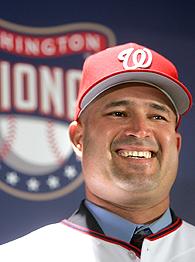
To those familiar with him, though, his success is anything but surprising. Few have been so prepared to take the reigns of a Major League team at such a young age. Acta managed in the Astros minor league system for eight years (1993-2000) before becoming a coach at New Orleans in 2001. He reached the majors the following year, working as Frank Robinson’s third base coach in Montreal. In 2005, he shifted to New York, following Omar Minaya and his staff to the Mets.
He had quickly built quite a reputation for himself around baseball, both in the United States and in the Caribbean. A staple of the Dominican Winter League for years, Acta was named manager of the Dominican Republic’s entry in the World Baseball Classic in the spring of 2006. Just months later, he was the new head man in D.C., taking over for his former boss, Frank Robinson. […]
posted by
Shawn, on October 3rd, 2007 at 01:29 am, in category
Uncategorized
In Baseball Between the Numbers, Nate Silver’s fantastic chapter, “Is Alex Rodriguez Overpaid?” highlighted a seminal fact about the player market: despite what your sports econ professor may have told you, the relationship between a team’s win total and its marginal revenue is not linear. Instead, there is actually a “sweet spot,” as he called it, at around 90 wins, where each additional victory is worth a great deal more than at any other range.
The reason is pretty simple: a team makes millions of extra dollars every time it hosts a postseason game. Nate estimated that, on average, a playoff appearance is worth just under $6 million, with plenty of room for upward mobility. A team that wins 100 games will almost surely make the playoffs, and a team that wins 60 surely will not. Adding a five-win player to either of these teams doesn’t do much to change their short term revenue potential. This data is very useful for bettors too. As competition is high in sports betting on baseball games, bettors do a good research on every aspect of the game. Countries like Germany are witnessing rapid growth in their betting revenue. The number of betting providers is also increasing every year. Visit https://www.wette.de/wettanbieter/ to find the best betting providers in Germany. […]
posted by
squawkingbaseball, on October 2nd, 2007 at 03:43 am, in category
Uncategorized
 Watch this space. We had the pleasure of sitting down with Nationals manager Manny Acta over the weekend, and we’ll be running the interview Thursday morning. In his first year at the helm in D.C., the Nats won 73 games, far better than expectations. There are few field managers with a better sense of the business off the field, as a well as a natural tact for in-game management.
Okay, so a little brown nosing never hurt anybody. But we would be stunned if you don’t come away as impressed as we were. Make sure to stop by Thursday and read the full interview.
posted by
Shawn, on October 1st, 2007 at 09:00 am, in category
Player Salaries,
RAS
Let’s pick on Tom Hicks for a bit.
 Last week we discussed the bubble that took hold in the player market in the late ‘90s and early ‘00s, and also determined that the current market still has room to grow. While there has been some tremendous work done on predicting player performance, little attention has been spent on forecasting the market. Why is this important? When dealing with long-term contracts, there are two questions a team must answer: how will this player perform, and how much will that level of play cost on the market through the life of the deal?
By 2000, MLB revenues had grown almost 140 percent over the previous decade. When the Rangers handed the keys to their castle to Alex Rodriguez, they likely expected revenues, and in turn player salaries, to keep skyrocketing at a similar rate. […]
posted by
squawkingbaseball, on September 28th, 2007 at 03:59 pm, in category
Uncategorized
For those of you that had trouble with the RSS link, it is now fixed. So no more excuses. If you haven’t subscribed to Squawking Baseball, do so immediately before your friends find out and shun you.
In other news, we’ve had a fantastic response to the data project idea. It’s been mentioned on top tier sites like Baseball Musings and Baseball Prospectus (thanks, Will), and we’ve had a number of inquiries from people who are interested in helping.
If you want to help, e-mail us, we would love to hear from you. You can also contact sports business maven Maury Brown, who is partnering with us on this project.
posted by
Shawn, on September 27th, 2007 at 10:38 pm, in category
Market Inefficiencies,
Player Valuation
We’re done talking about Walt Jocketty, but being that this is the second part of a series, we figured we would keep the name.
In the first part, we determined that the market for pitching is irrationally expensive, and contemplated some solutions to get around it. But up to this point we have mostly been discussing starters, when they are only responsible for about two thirds of all innings pitched. Filling these other innings with solid, dependable, cost efficient arms can go a long way toward offsetting the potentially bloated costs of a team’s rotation. For a number of reasons reasons, talented minor league (or even major league) relievers often slip through the cracks, toiling away in obscurity when they could be helping a big league team win games.
While several teams have been particularly adept at finding free talent relievers to stock their bullpens, the leaders in the clubhouse are the San Diego Padres. Year after year, GM Kevin Towers continues to find diamonds in the rough. Scott Linebrink. Doug Brocail. Rudy Seanez. Akinori Otsuka. Alan Embree. Scott Cassidy. Cla Meredith. Heath Bell. All of these men have found success in the Padres pen over the last four years while pulling in salaries at or near the league minimum. […]
posted by
squawkingbaseball, on September 26th, 2007 at 11:00 pm, in category
Uncategorized
 Our data collection project has just gained a major ally. The Biz of Baseball, led by founder and president Maury Brown, will be partnering with Squawking Baseball in gathering and distributing baseball’s financial information to the masses.
We are thrilled with this addition. Maury Brown is one of the most respected names in the baseball business field, and his site has quickly become a goliath in this realm.
Hopefully, this will only be the first of many. If you are interested in contributing, e-mail us. We would love to hear from you.
For more information, check out the official Data Project homepage here.
Feedback? Write a comment, or e-mail the author at squawk(AT)squawkingbaseball.com